By Dasim Budimansyah
THERE may be few state level forums that symbolically bring government and intellectuals together in an equal space of dialogue. The Presidential Briefing of the Republic of Indonesia on January 15, 2026, held at the Presidential Palace Jakarta, stands out as a key moment affirming that universities and professors are positioned as strategic actors in shaping the nation’s direction.
That Thursday morning, from 09:00 until around 12:30 WIB, I had the privilege of attending the Presidential Briefing of the Republic of Indonesia alongside about 1,200 leaders of state and private universities, as well as professors from across Indonesia. I am grateful to be one of the professors invited from Universitas Pendidikan Indonesia (UPI), participating in this state forum both as an academic and as a citizen.
For roughly three hours, the President of the Republic of Indonesia, Prabowo Subianto, delivered a direct and candid overview of the first year of his administration and the Red-White Cabinet, described as an initial phase of national transformation. The cabinet, inaugurated on October 1, 2024, has now been in office for more than a year, and the President framed this period as a foundational stage that will shape Indonesia’s future trajectory.
The President reviewed achievements and developments in many strategic sectors, including human development and culture, community empowerment, infrastructure and territorial planning, food security, the economy and state finance, national development planning, bureaucratic reform, politics and security, law and human rights, and foreign policy. From my perspective, this overview was not merely a list of accomplishments, but rather a comprehensive picture of the state’s work highlighting both what has been achieved and what still requires improvement.
What struck me most was the President’s openness in acknowledging the real challenges Indonesia continues to face. Budget leaks, under invoicing practices, corruption that has not yet been fully eliminated, and an increasingly uncertain global geopolitical situation were all addressed candidly. There was no attempt to conceal these issues. Instead, the transparency conveyed a clear seriousness in the government’s commitment to reform.
Amid this presentation, a question may have arisen in the minds of many participants: why invite university leaders and professors? The President’s response was clear and meaningful. University leaders and professors are viewed as part of the nation’s academic elite, a strategic group expected to generate ideas that both guide and critically accompany the course of national development.
Representing Universitas Pendidikan Indonesia (UPI), the forum was attended by Prof. Dr. Didi Sukyadi, Rector of UPI; the deans of FPIPS, FPSD, and FPBS; Prof. Dr. Dadang Sudana; and two Special Staff to the Rector. Their presence reflects the university’s commitment to actively engage in strategic dialogue between the state and the academic community.
For me personally, the invitation felt like both a moral and intellectual call. The academic world, in my view, should not remain confined to an ivory tower. Knowledge, research, and ideas must enter policy spaces so that development truly leads to public welfare and social justice.
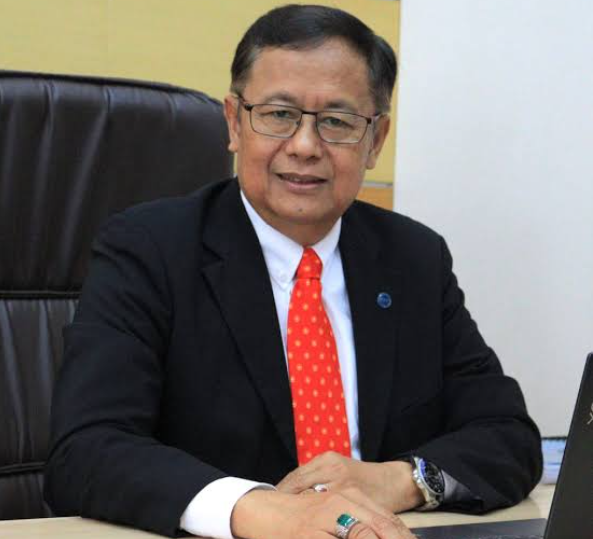
As a Professor of Civic Sociology and Director of GCC Indonesia, Prof. Dr. Dasim Budimansyah interprets the Presidential Briefing not merely as a ceremonial state event. Rather, it represents a symbolic space of dialogue between the state and intellectuals, and a clear signal that Indonesia’s future requires political courage supported by academic clarity.
Leaving the palace that afternoon, one conviction became even stronger: Indonesia can move forward only when the state and universities walk side by side strengthening one another, offering reminders when necessary, and consistently aligning with the interests of the people. This reflection is shared not only as a personal account, but also as a reminder that behind every state policy there remains space for all of us, especially academics to contribute and help safeguard the nation’s path.
Moreover, this reflection supports SDG 4: Quality Education by emphasizing the role of universities and professors in shaping informed and ethical leadership; SDG 16: Peace, Justice and Strong Institutions through the call for transparency, accountability, and evidence-based policymaking; and SDG 17: Partnerships for the Goals by highlighting the need for strong and constructive collaboration between government and the academic community in advancing national development. ***
Dasim Budimansyah, Professor of Sociology of Citizenship, UPI.
Source: berita.upi.edu